Showing posts sorted by relevance for query abc quick check. Sort by date Show all posts

Wednesday, February 2

ABC Quick Check is More Than Just the Bike


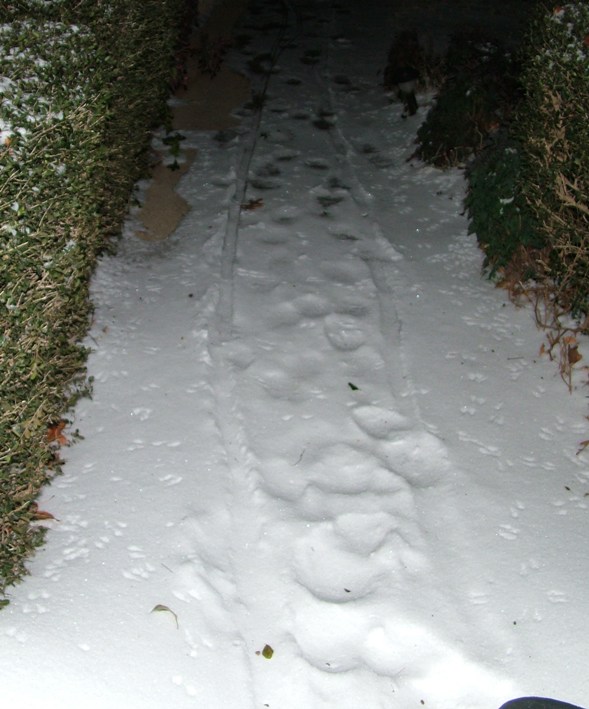
You KNOW It's a Bad Sign When YESTERDAY's Bike Track is Still Prominent
I've written here many times about my misadventures with "ABC QUICK CHECK." In truth, those problems really validate WHY one ought to be checking stuff and, more often than not, the misadventure consists of finding something before getting 20 miles from home. In my own riding, I include an element usually omitted from lectures on the subject - a little check ride. Before getting on the bike, all systems are checked, as in the video at the bottom of this post. The extra little check ride, before pushing the bike, adds a validation of the basic check by spending just the start of a ride in validating that everything really IS OK. I like redundancy when I can get it and the check ride confirms the results of the basic ABC. Usually.
The Local Road Surface This Morning. It May Not be Deep, But it IS Really Slick - Literally

I LOVE This Headlight, But it Didn't Save me from a Slick Patch

Safety-Oriented Cyclist Concludes that When a Fall Breaks Parts and Knocks the Chain Off the Chainring,
it Might Be Difficult to Operate Predictably
This morning, it illustrated that the check ride is about more than just the bike. As you know, from my post yesterday on "Second Pass of the Luftwaffe," things are a little slippery around North Texas at the moment. Looking outside, it was apparent that the check ride might be more a test of the road than the bike. For the first time in recent memory, my "A" portion of the "ABC" consisted of letting some air out of the tires to improve traction. To make a short story even shorter, while initally things looked pretty sweet - even to the point that brakes actually slowed things down (something you can't actually check in icy conditions without at least a token check ride and which did NOT happen yesterday), even the mighty P7 light was unable to save me from a fall that busted the plastic cable lock holder (not really a major loss) and caused my chain to jump off the chainwheel. I'm really glad I was riding with my feet OUT of the toe clips. I elected to walk home, as the prospect of touching the freezing chain with bare fingers was less than appealing, as was the prospect of rerailing the chain directly with a gloved hand. It's an advantage of an "around the block" check ride - one need not deal with on-road failures. The light enabled me to find the various bits in the dark, but prudence suggested another Land Rover commute was in order. Still, that check ride opened up the flight envelope a little. Dan G, the LCI demoing the ABC below is fond of noting that we "drive" our bikes. Well, today, I rode it to see if it WAS drivable. That check convinced me that I lacked confidence to operate the bike predictably, traffic or no.

As in flight test, cycling envelope expansion is sometimes a slow and very incremental process if one values safety. The end objective is the same in either case, to become better. Doncha just LOVE this weather? [insert quote from Gordon Cooper in "The Right Stuff" here, but this blog doesn't use that language]

Pilot of Northrop F-5E Tiger II Expands the Envelope Incrementally - from Wikipedia

Monday, November 1

ABC Quick Check FAIL

Arriving Back Home, the Tire Still Had Air. The Presta Valve was Still Broken.
I Guess Those Little Screws Don't Replace Themselves. OOPS!
In bike school, they teach you the "ABC Quick Check." In this case, the "A" means you are supposed to make sure your AIR is at the proper pressure in the tire before you gaily go riding off to work or wherever else you are riding.

As is my habit, first thing every Monday morning, I attach my floor pump to each of the tires and deliver the four to six strokes needed to bring each tire back to its target starting pressure. I pump the rear tire up to 110psi and the front up to 100psi. It's why the rear tire now has about 6000 miles on it, while the front tire is barely broken in at 2000 miles.

While I don't necessarily agree with my instructor Richard's assertion that "Presta is Besta," Presta valves DO look a little snazzier. Well, they do unless you happen to bend the valve core screw a bit with the pump and then snap it off completely when you try to straighten it back. There's a first time for everything. While I entitled this post "ABC Quick Check FAIL," there are a number of other titles that might be much more apropos. However, "Steve Butchers a Perfectly Good Tube Because He Can be an Uncoordinated Klutz Sometimes" isn't very catchy.

AFTER this little episode, I screwed the cap back on and rode the tire to work and back home with no further incident. In case you think I'm a TOTAL idiot, I do have a spare tube, and I took the precaution of stopping off at the LBS on the way home to purchase a new tube. While this tube might last a month or more before becoming dangerously prone to a pinch flat (symptomatic of tire pressure that's simply just too low), I'd rather not run this particular tube out to the bitter end. On the other hand, I'm sure it'll wait until the weekend. It WOULD be nice if the inner valve were replaceable on a Presta valve. Of course, you're reading a post from a serial "ABC" failure, so we KNOW your judgment might be open to question...

What a Presta Valve SHOULD Look Like
From Wikipedia

Tuesday, December 21

Try, Try Again

Bikin Gail in Action
In June, I tried taking the LCI course, but an unexpected hospital visit led me to drop out. Another seminar was scheduled in Plano on the first weekend in November. It got postponed due to low signup. Perhaps the third time will be the charm. This time it is the last weekend in January. I don't know why most people join or remain in LAB - I'm not a pollster, but it's why I joined. Bike Ed is something the world needs more of and, at the moment, LAB is the only nationally recognized Bike Ed entity that will teach regular people.

HOWEVER, in honor of Dan G, who was so kind as to credit busting a Presta valve as an “ABC Quick Check” success, of Richard, whose "Presta is Besta" proved ever so true, of "BikinGail," whose advice always seemed to come true in unexpected ways, and Regina G, who made the class assignment equivalent to assigning a forging convict to teach a drawing course, here is THE POST I NEVER MADE. I wrote it early last June, right before we had our first class session. As you may see, “ABC” is a recurring theme with me. It's been revisited again more than once since I wrote the post, including Doohickie noting an "ABC Cheat" I got caught at last weekend. Contrary to appearances, the "ABC Cheat" did not involve air in any way and it didn't even involve the rear brake I changed only days before.
Regina at June LCI Course in Plano

Dan G Says THIS Broken Presta Valve is an ABC Success
So How Special is That?
One of the aspects to learning how to instruct people in cycling is they actually expect you to TEACH stuff! I’m wondering if my seminar instructor might have been sneaking looks at my blog before assigning me to talk about “ABC Quick Check.” Yes, this topic got assigned to the guy who couldn’t figure out how to use a CO2 pump. The guy who carried a tube with a Schrader valve around for months – on his bike that has Presta rims. The guy who rode 1500 miles on a tire with a bulge just to see how far he could go before it “let go.” The guy who noticed his brakes dragging the morning after he adjusted them, before leaving the house, and decided to ride to work anyway, figuring that the drag would go away (it did, after he adjusted the brakes again upon his return home). The guy who tested chains in Simple Green to see if they’d really crack. The guy who rode through the entire HH100 with a rear derailleur that emulated a mouse choral concert. The guy that kept his front quick release 120 degrees clockwise from the recommended position so water wouldn’t leak in and bugger up the computer sender battery if it got wet. I can imagine my instructor chuckling to herself and noting “I’ll fix HIS little red wagon!” Seriously, how badly can I embarrass myself in eight minutes? Remedial “ABC” indeed. Who says seminar instructors have no sense of humor?

More problematic is I got assigned “lane position” as a shared second topic. Perhaps I’ll let my fellow student do the bulk of the talking on this one. I don’t think “the line of sweetness” is what they’re looking for when instructing someone in T101. I don’t think T101 students are ready to hear about how sometimes roads narrow or widen in ways that affect cyclists, but that motorists don’t even notice, or even how to deal with a police officer that does not like your particular lane position. Maybe I’ll chime in and tell them “when in a bike lane, ride outside the door zone,” and “choose the right-hand lane that serves your destination.” This seems like a subject designed to get me into some sort of PC trouble.


Buddy, Right After Steve Got CAUGHT by Doohickie in an "ABC Cheat"
 Yup, REMEDIAL ABC!

Friday, May 18

Bike Week ABC FAIL

When I GET AROUND TO IT, I'll Know if THIS is the Cause of a Slow Leak. UV Radiation is Hard on Bike Tires
Steve A, serial offender against the "ABC Quick Check." It isn't that I don't make the check, but the intention of doing so isn't meant to help an ABC scofflaw assess how much longer he can go on anymore than checking the oil on a car is intended to assess how many more miles can be driven before the motor freezes up. I'm bad, I admit it. You can see past episodes here. Among other posts.

This one is different. You see, this is Bike Week and it gives my normally boring commute a little extra spice. On Monday, somehow my front tire got damaged. I noticed it on the way home, but tire pressure was reasonable. On Tuesday morning, my front tire was way too soft. Contemplating things, just as motorists sometimes deliberately drive faster than the posted speed limit. I decided to just pump the thing up and ride the seven miles to work. I figured I'd carry the tire in and fix it during lunch. Little did I know what a conversation starter my front tire would become. Before you knew it, someone had placed a band aid on the tire (obviously someone with a poor eye for tire damage and a sense of humor as odd as mine). Well, at lunch, the tire was still pretty firm and I wound up riding home again on the untouched damage.

Since we met with our financial adviser Tuesday night, I put off fixing the thing until Wednesday morning. With diligent ABC technique, I'm STILL riding the bike, having determined that the tire loses about 100psi over 24 hours. Being the engineer I am, I quickly figured that if I ran it up to 120 in the morning, it'd still have 80 for the trip home without even a single stroke of the mini pump. 80 is not bad for the front tire on Buddy, particularly since my riding is biased towards smooth pavement.

All this on a bike that has a brand new replacement tire laid out for it and THREE spare tubes. But this is Bike to Work week. I'm going to the event in Fort Worth. I'd go to Richardson but FW is a straight shot and I can get to work only 1.5 hours later than usual if I skip the speeches. Maybe another year when going to work at the same time as non-government people is optional.

I think that this year I will manage to avoid losing my camera AND I'll have the secret pleasure of knowing I'm the only one there who knows how quickly his front tire is going flat. Unless, of course, the slow leak suddenly turns into a quick one. If that happens, y'all may hear how hard bike commuting really can be. But I think I'm gonna try to ride that leaker through to the weekend. If I patch the slow leak, I'll STILL have three spares which will let me keep two of them for my knobbies if we get snow and ice next winter.

Golly, I sure hope Gail, Richard, Chandra, or Warren don't read this!

Saturday, August 22

ABC Off!

Armadillo Still Mounted on Frankenbike's Rear Wheel. Sidewall Was SAD, but Tread Separation was the End of the Tire
I’ve been an ABC Quick Check Failure for many years. It isn’t that I don’t DO ABC Quick Checks, but rather that I typically make a mental note to “fix that later” as long as I decide it will not keep me from completing my immediate trip. Sometimes, that approach proves less than satisfactory. Sometimes, it merely allows one to combine multiple fixes into one session. I’m fortunate enough that this time, I got to do the latter.

This all started back in late spring. My rear tire on Frankenbike was flat one morning. Adopting my usual approach, I pumped up the tire and it held air just fine for my morning journey. The next morning it was flat once again. I pumped it up again and this time it stayed inflated for an entire week. After about four episodes, I decided that my wife’s bike needed exercise (she rarely rides it) and I’ve been using it for the entire summer. After some experience with it, I’ll make a future post about my summer with “modern” bike technology. Needless to say, while I was going through these gyrations I was making mental notes about truing my front wheel and adjusting the brakes, not to mention cleaning and lubing the chain. I also picked up a new tire; a low-cost Kenda.

This all came to a head this week when my three daughters came to visit. Suddenly, Frankenbike was needed for transport once again. I pumped up the tire, but unlike past episodes, this time, the tire went flat within a couple of houses and the kids were not really enthused about riding “Madeline.” Apparently, fixies are not everyone’s cup of tea.

To make a long story short, the family wanted to motor in to the big city (Aberdeen and Hoquiam) to go shopping. My request included four spokes and some rim tape. I already had bike chain lube handy. I provided the old, broken spoke so they could be sure to get the proper length. In due time, I had the parts, including an extra roll of rim tape (for reasons unknown). I set to work and discovered just how pleasant truing an old rim can be when you have a bike stand, a comfortable chair to work with, and you are not in any rush.

Now there ARE a few extra items that don’t entirely fit within the narrative. They include:
  • This is my second Armadillo tire that failed by separation of the tread from the casing. I am now “Armadillo-free” in Ocean Shores.
  • I discovered that rim strips, such as the Origin 8 I have onBuddy, are much less universal than rim tape such as the Velox I used in this repair. The Origin 8 does not come in a 27-inch size and I don’t know if the 700c strip would fit. I’m guessing it’d work fine since the rims are not that different in size, but when the “LBS” bike shop is 30 miles away, I voted for rim tape that’ll fit ANYTHING.
  • I used an ultrasonic parts cleaner to clean the chain. It worked OK, but I was wishing I had either my Park Chain Cleaning tool, or my trusty can of carburetor cleaner.
  • Shiny new spokes really make their 30-year old ancestors look LAME
  • I'm not sure if this is typical, but my new Kenda was MUCH easier to fit to the rim than any Specialized, Vittoria, or Continental I have recent experience with. No "must use hook bead rim" nonsense, either. It also seems that 28c wide Kendas are wider than 28c Armadillos.
  • While I was fixing stuff, I fixed my second floor pump as well (it had a failed pressure head) using the head from my lousy third floor pump. My favorite floor pump, shown here, is still in Texas.
  • Aberdeen, besides being the hometown of Kurt Cobain of "Nirvana" fame, was also the home of America's most prolific serial murderer; Billy Gohl. While there are no records of Billy's first six years of operation, 41 bodies were recovered in his last three years in Aberdeen.

Armadillo Tire as Removed and Ready for Trash. Note the Separation Between the Tread and the Still-Intact Casing
I'm Not Sure WHAT that White Spot is, but it was on the Inside of the Tread When the Tire was Removed


Sunday, April 18

B is for Brakes

There truly is harmony and psychic unity – sort of – in the narrow world of blogs that talk about bikes and cycling. On Tuesday, Lizzylou talked about stopping without using brake pads. The same day, Rantwick decided to ride his fixed gear to work without any brakes at all. Ironically, on Monday, I had my own braking experience and it wasn’t pretty.

V Brakes on a Cross Bike are Powerful - and Touchy. For its Second Set of Pads, Buddy Uses Kool-Stop Salmon "Thinline."
We Shall See How THEY Last. The OEM Pads Went 3400 Miles, I Don't Jump Off My Bike at Stops to Stretch Their Life.
In bike school, they talk about “ABC Quick Check.” The “B” Means you are supposed to check your brakes – as in you don’t want to go zooming off, only to discover at the bottom of the first hill that they aren’t working right. Well, that’s a good principle, and one I subscribe to. As a matter of fact, I’d just adjusted Buddy’s touchy V brakes. In bike school, they tell you that with full brake application, there should be two fingers’ worth of clearance between the lever and the bar. With Buddy, full application with freshly adjusted brakes is at most one finger, and I wind up adjusting brake pads once every month or two. I suspect that Specialized reached the same conclusion about V brakes on cyclocross bikes, since they have now returned to traditional canti brakes.

Anyway, as soon as I got on the bike Monday, I knew something was amiss. A brake was dragging – not a whole bunch, but it was definitely dragging. The front brake - the wheel dragged a little when I spun it. My first thought was to roll back in the house and either adjust it or drive in. Sometimes we should go with first thoughts. My second thought was that the drag wasn’t all that bad and would get better with time. Plus, I had a tailwind. That seemed reasonable for the first couple of miles. However, as I went on, I noticed that speed fell off a good 5 mph from typical. What’s more, when I finally got in to work, twenty minutes slower than usual, I felt tired, a bit “down,” and a couple of people wondered why I looked flushed.

Going home, it all came together. A dragging brake AND a headwind. It was a SLOW trip home. I even got off the bike and walked up a couple of the hills. That isn’t something I ever do. I kept thinking – "I feel a little ill and that’s partly why I’m going so slow." In the final analysis, it took 40 minutes longer than usual to get home.

The moral of this little lesson is that it isn’t enough just to CHECK, you actually want to ACT based on the results of the check. The OTHER moral is that, while cycling may be fun and safe, it’s MORE fun if you don’t ride around with a brake applied all the time. It is also an argument in favor of barrel adjustors, which the Tricross lacks. As a matter of fact, there WILL be some modifications made to those brakes next time I have to change out brake cables. If I get really irritated at the things, I may even go as far as changing them out for canti brakes.

Good Brakes Don't Keep You From Adjusting Them Too Tight!

Monday, July 26

ABC Oops

Bar End Shifter Installation
When my road bike derailleur broke, described here, I got another one after I found that some of the simple parts aren't available and others were bent. Then the right (rear) shifter stopped working. Conveniently enough, I decided this was a good time to switch to the eight-speed bar end shifters I already had.

Over the weekend, I changed the various stuff out and did a bit of a shakedown cruise after work today. I dutifully put air in the tires, fulfilling the "A" part of "ABC Quick Check." Then after checking basic brake "B" and chain/changer/cassette "C" operation, I set off for a rather extended check. Can you call it "Quick" if it takes an hour?

Anyway, shifting and braking functioned well, as would be expected from new cables and housing, but before I'd gone a couple of miles, I noticed a disturbing rattle from the back end of the bike. Stopping, I looked things over and didn't see anything. I decided I'd give things a thorough going over when I got to the coffee shop. It really wouldn't do for a distracted cyclist to ride along and trying to look at his rear wheel and associated hardware. "Officer, I really DON'T know WHAT was wrong with that guy, he just kept looking back until he ran right into that pole!"

Anyway, when I stopped, the FIRST thing I noticed was that it looked like the cable for the front derailleur had been installed by a drunken sailor. FAIL the "C."

The Cable is SUPPOSED to go THROUGH That Hole!
It's Dried Mud on that Chainstay, Not Corrosion

THEN I saw the cause of the disturbing rattle. That shows up below, where the rear brake nut backed off until the seat stay stopped it from going any further. FAIL the "B."

This NEEDS to Get Snugged Up a Bit!

At least I managed to put AIR into the tires without any problems, and it illustrates why it is a good idea to ride around a bit after fooling with the shifting and braking on the bike. Imagine how I'd have felt if, on the way to work, my rear brake had fallen apart and the shifter cable cut into the frame. Instead, all is well, or it will be if the NEXT shakedown ride reveals no further problems. By the way, what LOOKS like corrosion in that middle photo is really dried mud. The road bike needs a bit of cleaning/waxing action before being put back into service.

The New Brake Levers DO Look Nice

Tuesday, July 13

Going and Not

Fatally Damaged Derailleur on Road Bike. Missing Pulley Was the Least of the Problems.
Hmm, reading Big Oak's post about his axle breaking, perhaps things are going around. In my case, they aren't going around. At least I didn't bust a wheel.

I rode my road bike to work this morning. More accurately, I rode it 90% of the way to work this morning. At that point, a rear derailleur pulley bolt departed and flew to points unknown, as did the associated pulley. After some fruitless looking around, I found that I could still power the beast with one particular gear combination as long as I didn’t mind it skipping if I pedaled too hard, and if I held my breath a lot. That let me limp the last two miles in. At lunch, I concluded that I’d been lucky to go two miles, and no jury rigging would keep it together well enough to get home under power.  What's more, enough parts of the derailleur are bent, that I think I shall ride Buddy to work for a bit while I see if I can't get a replacement. While I do not recall “ABC Quick Check” instructing us to check the security of derailleur pulley bolts, I shall add this incident to my long and growing list of “ABC” things that go wrong. I can’t really say I’ve ever had a derailleur come apart this way before except when I was dismantling them on purpose. This particular derailleur was last dismantled about 250 miles ago. Maybe it’s bad karma from Big Oak’s axle.

Just as with Jaguars, on rare occasions, it’s best to give the vehicle a ride home…

Felix, the Jaguar

Sunday, January 17

Traffic 101 Wrapup

Gail Spann flexes some Bike League muscle
The second day was mostly bike drills, with some on-street group riding and with a test to wrap things up. I took some videos of most of the bike drills for purposes of future reference. For me, personally, the most valuable drill was the quick stop, because that is the one maneuver I never practice on my own. Even with four instructors present, I managed to get a bit bruised doing quick stops, though my voice quickly returned to normal.

After taking the whole class, I found it very helpful, partly because I wanted to see the mechanics of the class and wanted to hear different instructor viewpoints. If you were wondering about the class, it stems originally from the principles in Effective Cycling, but it has undergone a lot of evolution since John Forester's involvement. The course could benefit from some modernization, particularly in the lecture portion - a self-paced web class would transform things, allowing the instructors to focus on "hands on" time with the students. I suspect it could also help instructors understand where their individual students could most benefit from added help. I will be very interested to see what they cook up down in Florida.

Anyway, I'm still looking to get some instructor thoughts on objectives 2, 3, 4, and 6 as described here. I remain optimistic on this.

On a lighter note, other learnings included:
  • Ponytail/helmet interaction. This is not a problem I've had to deal with personally
  • Chandra, besides his well-known penchant for lights and "high vis," also demonstrated some subtle humor with his jacket, which stated he got "infinite miles per gallon"
  • I got to meet one of Chandra's children, that being Shaggy, who was incredibly enthusiastic about the meeting.
  • I learned the difference between a Russian Sauna, a Turkish Sauna, and a Finnish Sauna.
  • I learned of many different investigation areas related to video signal cameras.
  • I learned that driving I-635 in Dallas is stressful, even on the weekend
  • The Bike League's position on proper tire pressure corresponds quite closely to Apertome's, stated in comments to post here. I don't recall why this subject came up other than it must have been in connection with the "ABC Quick Check" and Richard walking around with a floor pump this morning.
  • I concluded it's tougher to ride with a group than to ride alone. All the "slowing and stopping and car back and car up" has made me weary.
  • A motorist chuckled at us as we left for our ride. She knew we were getting taken out to get run through our paces and said she told one of our instructors she'd be watching to see when we got back. Some people are amused too easily! I think I prefer getting honked at.
Richard and Dorothy help with pony tail repair
My suggestion that a pair of scissors would make a quicker fix was NOT appreciated!


Chandra and Sheila at bike drills


Chandra wondering if I'm about to copy his test answers
or perhaps he's wistfully thinking about Shaggy


Obligatory photo with arrows, including Secret test answers
Eric Jackson and Gail Spann wonder - Did that student learn ANYTHING?

Thursday, January 31

ABC Choices

Yes, That IS a Bulge. Illustrating the Value of the "A" Part of "ABC Quick Check"
Hmm, my rear tire's had a real SLOW leak for about three weeks now. Each morning, I pump it up from about 60psi to somewhere north of 100. Now, It's developed a "bump bump bump" with each revolution. The symptom isn't getting better.

Looking at it, there's a bit of an "owie" on the tread. Look at the picture carefully and you can see it - a reverse curve that represents a bulge in addition to the gray area that is perhaps coincidentally in the same vicinity. Ironic really, considering that Big Oak just got some new Continental Grand Prix 4 Season tires. THIS is the same tire, and it's only got about 4K miles on it. In the past, if babied, these tires will go nearly 6000. What has German manufacturing come to? Crimeny, these things cost almost half as much as good Jaguar tires!

Well, considering that I've been an "ABC Scofflaw" in the past, I'm considering three options:
  • Change the tire and tube (remember that slow leak) before tomorrow's ride. I do have an older, but still serviceable Conti in hand. Actually, I have two, but the sidewall weaving is coming off on the second tire while the first one is mere tired (no pun intended)
  • Pump up the tires on Frankenbike and simply defer the issue
  • Carry the extra tire along to work tomorrow "just in case" and hope that things will stay stable for one more day (our company will be shut down next week)
  • Carry the tire along and change it at lunch time, cutting the risk of a flat on the trip by some unknown fraction
My loyal reader will bet I take option 3. We shall see. Stay tuned.

Monday, January 3

Blowing Air


Venus, the Symbol of Friday, or, in "French Canada-Speak," Vendredi. From Wikipedia
 Over the Holidays, I went and fixed all the family bikes. While bikes may have some of the same DNA as old English cars, they’re a lot easier to fix. Unlike old English cars, bikes have a greater propensity to lose air from their tires unexpectedly in a rapid fashion. This has caused a reassessment and an actual RESOLUTION to modify my bike commute routine for 2011. It is ironic that, only yesterday, I sorta sneered at the whole practice of New Years Resolution making.

Sleeping, From Wikipedia
My past commute routine has been to top off the air in my bike tires Sunday night or Monday morning. Typically, each tire will require about four strokes of the floor pump to reach full pressure. On occasion, something will go wrong, like the tire will be flat when I go to pump it or it will clearly have lost an abnormal amount of air. Of such events are part of why the “ABC Quick Check” is a recommended routine action. Well, last night, to get a jump on the New Year, I pumped up the tires on my commute bike a little early; Sunday night. As I put the pump head on the front tire valve, came a “psssss” sound that clearly indicated a problem. Since it was SUNDAY NIGHT and not MONDAY MORNING, there was no rush or panic. I simply took off Frankenbike’s recently repaired front tire and put it on Seth. No need to even disturb my spare tube. No fuss, no muss. Oddly, this caused me to double check the Planet Bike backup light and, sure enough, its batteries had died. Had I forgotten to recharge the P7 Light’s batteries, I could have been lightless (well, I would have been reduced to using a Cateye light, anyway). Since I overslept this morning, the temptation to drive would have loomed. Even with the v3 commute, it’s still quicker in raw time to drive than to ride, because I can dispense with having to listen to the weather report before departure.

This serendipitous failure caused me to resolve to revise my commute routine. Henceforth, I resolve to top off the air in my tires and recharge the P7 Light’s battery at the end of the week's commute (FRIDAY) rather than waiting until Monday morning. This routine change has the advantage that if “unroutine” occurs, I do not have to scurry around to fix it quickly for the Monday morning commute. I can even pick up a replacement item at the bike store if need be, which Sunday night checkout does not support.

PS: In retrospect, since Frankenbike is all fixed, I could have taken Frankenbike today, but that would have involved a bit of changing around of lights. Those tool-free brackets, despite what the manufacturers would like us to believe, are NOT trouble-free. It is also odd that, despite sleeping an extra 40 minutes, I actually arrived at work at the same time as usual without skipping things like the morning shower and shave...

Frankenbike, Innocently Resting, Showing Why Kickstands are Often Extraneous

Tuesday, February 1

Second Pass of the Luftwaffe


The Scene Looking Out the Front Door Didn't Look Real Promising. This is "Freezing Rain?"
 Last year, in a post here, I related how, in the movie, "the Longest Day," the Luftwaffe left their warm bases and made a token strafing pass over the invasion beaches at Normandy, and then returned to base when the pilots saw how ridiculous it was to send a couple of fighters against the massive Allied Invasion. It was an apropos theme for my own cycling foray out into the snow.

This year, the Luftwaffe was a little more determined. And a little brighter in yellow rain gear as well (just in case a Channel rescue might be required). As with all prudent aviators (and cyclists), the onset of less than ideal weather suggested extra caution and I elected to extend out the "check" portion of the "ABC Quick Check."


Our Intrepid Cyclist Looks SO Visible in that Yellow Raingear When Illuminated With the Camera's Flash.
The Ski Goggles Were Donned for the First Time this Winter. Yippee!
 
That P7 Head Light is Bright, Even With a Flash.
Mode Share on This Street - Bicycles at 100%, Autos at ZERO

I found that the bike went forward fairly well in the accumulated mix of sleet and snow after a bit of start-up wheelspin. However, I was less than impressed with its stopping ability. While the brakes on this bike stop tolerably in regular rain, they seem to give up the ghost when the water on the rims is in a solid form. Not wanting to give up the ghost personally, the Luftwaffe returned to base, having made a second pass over the beaches and finding it would be unwise to do more. Perhaps that is why BMW was so enthused about buying Land Rover not too many years back. Perhaps Churchill was wrong. In Texas, maybe we ARE made of sugar candy...

Luftwaffe Returns to Base - From Wikipedia

Yes, I DID go further than last year. NO, I think I might drive to work again tomorrow, which would mean I'll have driven to work more in February than in the previous two months combined. I may have moved beyond "just a fair weather cyclist," but Texas ice storms may require serious equipment upgrades - like Buddy. If this continues, I may resort to mounting the Vittorias on Buddy.

Saturday, March 6

Clever Bike School Instructors

Parking Lot Where the "Accident" Happened
Sometimes my commute starts to seem routine. I wonder about what in the heck is there left to write about on this blog about it. At such times, invariably something novel pops up. It's different than driving in to work. Driving, it seems that the novel things all involve some rice rocket finding a new way to turn my few remaining hairs gray (grey for Rantwick and Ham).

Anyway, yesterday, on the way home from work, I had an "accident." In a parking lot. Not the kind of parking lot that Rantwick's mom warned him about, but a parking lot where I actually detoured into just for the purpose of purchasing something. Specifically, a "tall, no room, bold if you have it" product from a major coffee purveyor. I'd enjoyed the hot beverage, and was departing, when the accident happened. Sssssss and suddenly the "A" part of the "ABC Quick Check" was departing from the norm.

Not to worry; as a proud and happy "Traffic 101" graduate, I'd just change the tube in that tire and I'd be on my way with virtually no delay at all. The barista leaned out the drivethrough window and waved. I gaily noted that it came with the territory. I looked at the tire and it appeared I'd picked up a nail or something. Those Contis are tough, but nails are more than they're designed to handle.
Bike Down!
Exhibiting the speed and dexterity of much practice over the years, I had the tire dismounted and the tube removed with a speed of a NASCAR mechanic. I reached into the bag to grab my spare tube, and, BY JINGO (or thoughts to that effect), this tube is totally WORTHLESS. It was at that moment that my instructor Richard's words came back to haunt me. "Presta is Besta." All the rest of the way home, I kept muttering, "That's for darn sure when you have a wheel drilled for a Presta valve and your spare tube has a Schrader valve!" You see, my spare looked like the picture below. I'm sorry, Richard. At least my patch kit worked. I've been lugging that spare tube around for months. Talk about useless weight.

Another note, for those that think motorists are unfeeling cads that are merely waiting to kill any cyclist in the vicinity:

While I was going through all of this, I received offers of help from three motorists that were departing from the neighboring bank drivethrough, including one from two guys with baseball caps in a white pickup. White pickups are sometimes viewed with suspicion by cyclists on the road. I don't know if any of these motorists had any clue about fixing bike tires, but I felt heartened by the offers all the same. Each of you gets a gold star. We all had some good, if mercifully short conversations. Civility is NOT dead. What's more, I also discovered an added shortcoming in my bike "tire fix" equipment. You cannot use an oak tree twig to puncture the top of a glue tube. Keys don't work, either. An SKS fender stay will ALMOST work, and I'm not sure the slightly smaller Planet Bike fender stay wouldn't. A loan of a pen from one of my favorite baristas did the trick. I said "pin," but "pen" works just as well. Actually, now that the glue tube has been punctured, I won't need to worry about that - instead, I'll just have to make sure the glue hasn't dried out from old age. Upon reflection, I'm not sure that the plug from a set of headphones wouldn't work, but I didn't think of that at the time (yes, Gail, I'm BAD, REALLY BAD).

Yes, Presta IS BESTA Than Schrader When Your Wheels Have Presta Holes
Spare Tube had a Worthless Schrader Valve!

Postscript: Feeling around the inside of the tire, it appeared the Kevlar composite layer has failed. What's more, the whole thing felt really thin and flimsy, and the tire casing was feeling a bit like thick paper. Rather than using a dollar bill, I used another patch on the inside of the tire casing. Perhaps my revised goal of making 6000 miles with these tires was optimistic, and my original 4000 mile life was more on the mark. I'm going shopping for new tires. 4250 miles is a respectable mileage. I think I'd regret running them until the cord actually showed through the rubber. My new tires will be the same as the old ones. Continental Grand Prix 4 Season. 28c width. GREAT tires! 3 cents per mile, but worth it in peace of mind. THESE TIRES ROCK! I noticed that Tracy Wilkinson also uses Contis. A post on his experiences over on Springfield Cyclist would be of great interest to at least one of his blog readers (hint hint).

Saturday, July 10

Newfangled Brakes

V Brakes Get Clogged With One Trip Through the Mud Pit!
Buddy, my Specialized Tricross, came with V Brakes (technically, they're "direct pull cantilever brakes" since V Brake is a Shimano Trademark). If you have a mountain bike, you may have them as well. I kind of liked the idea, knowing how strong V Brakes are, and not realizing that Specialized was actually letting their marketing people foist off a benighted and poorly engineered product off on unsuspecting public. You see, they coupled these excellent brakes with even better brake levers, the SRAM Rival. This is unfortunate because that combination is much like attempting to carry the racehorse Seabiscuit in a Jaguar XJ220. Both are among the very best, but they just don't go together. The V Brake has a LOT of mechanical advantage for the pads. With enough cable pull, you can bend your rims if that is what is needed to stop. The SRAM road brakes, on the other hand, do not pull very much cable. They're designed for fine modulation of the brakes at speed. What this means is that I run with virtually no pad clearance, so that I have brakes before the levers bottom out on the bars. In their wisdom, Specialized did not include any barrel adjusters in the system, making the monthly brake fine tuning even MORE fun (he says sarcastically). This was not just on their low end bikes, either. The S Works bike was set up exactly the same way.

At left, you can see how the brakes look after a few cross laps, when initially properly adjusted, so that you actually HAVE a token braking capability. I did not add any debris for added drama. It wasn't necessary.

There is a very good discussion on cyclocross brakes, here. You'll note that one team DOES use V brakes in competition. They combine their use with a little gadget called a "Travel Agent." The Travel Agent allows you to double the cable pull, allowing those massive V Brake pads to work with a reasonable amount of clearance using the amount of cable pull that is possible from road levers. This raises a couple of questions. First, if this is such a good idea, why didn't Specialized just do it themselves rather than making owners have to buy obscure items the LBS hasn't heard of to make the brakes work properly? Second, those pulleys rub the cable, leading to at least one report of a brake cable snapping. Am I fooling myself by making my brakes fail completely when I will need them most?

I'm going to try out the Travel Agent. I'll just keep a careful eye on the cable for signs of fraying. Conveniently, I already have one that I bought to jigger the shifters on Frankenbike, and my LBS now knows how to get them.

Still, I like to keep a step ahead of my brakes instead of adding to my list of ways the "B" in "ABC Quick Check" can snag a cyclist. When I took Buddy in for its 5000 mile overhaul, I had the mechanic add a cantilever brake hanger at the front. The bike already had one in back which I use as a supplemental fender support. Unfortunately, clearance between the hanger and the stem is very tight. There's about a finger's width clearance between the top of the hanger and the stem. Hmm. Durn newfangled bike stuff! I would have thought they'd get this stuff ironed out with nearly 200 years of experience.

Front Cantilever Brake Hanger is Very Tight - Yes, the "Specialized" Printing is Upside Down on the Bike

Rear Canti Brake Hanger
BY THE WAY, Specialized has now abandoned this approach in their new Tricrosses and they have gone back to cantilever brakes just like almost all other cyclocross bikes. Any you see at your LBS this way are old models you might get a good deal on. Just figure out how you're going to make the brakes work BEFORE you take it home!

Lest I come across as negative, please know that these are the strongest brakes I've ever had. I LIKE strong brakes. And they stay that way for at least a couple of weeks of heavy use, before they need to be adjusted again.

SUNDAY UPDATE:
Comments can be the best part of these posts. I tried the travel agent on the front brake and I can't say I'm impressed. OTOH, I now have one of the bad boys below on order. I think I'll get a set of Tektro CR720 Cantis and we'll see how THOSE work. What can I say? I just want brakes, even if Specialized thinks I don't need more than the appearance of brakes.

Friday, February 20

Bike School Student Again

MSF Course includes Reference Text Like LAB, but Unlike CS. Material is Also Available on Line
The Bike League requests that its instructors periodically take educational material related to bikes in order to keep "fresh" in bike ed. The principle is exactly correct and ought to be followed by all; ESPECIALLY by instructors. Recently, I took advantage of an opportunity to become a bike school student all over again through a Motorcycle Safety Foundation (MSF) course offered near my home in North Texas. There is an obvious (to me) synergy between how to safely ride and control a bicycle with how to do the same thing on a heavier and more powerful two-wheel vehicle. Indeed, I found MANY things that cross over directly, and it was fascinating to see the similarities and differences between the Bike League (LAB) and Cycling Savvy (CS) bicycling programs.

MSF Instructor Has a Pole to Help Cone Placement, With Marks on the Lot, Unlike Either LAB or CS
ALL Riding was Done in this Parking Lot
General Observations
The MSF course takes two FULL days, and there is at least one added follow-on course. Thus it is longer than either of the cycling programs. In addition, in many states, taking and passing the test obviates the requirement to take the state skills riding test in order to win a motorcycle endorsement to one's driving license. On both days, the course started with some classroom work that consisted of going through the MSF handbook and watching relevant videos. Late each morning, we'd go over to the parking lot for various drills. Unlike EITHER the CS or LAB programs, there was no on-street riding and, as you can see below, the school-provided motorcycles do not have licenses or turn signals installed on them, making them not street-legal. My own class was probably unusual because one of the three students already had his motorcycle endorsement, was a deputy sheriff, and was taking the class in preparation to become an instructor. The second student was taking the course to get his motorcycle endorsement and did not have much more motorcycle experience than myself. The third student was me. While my bike handling skills were probably better than most, I last rode a motorcycle more than 30 years ago. Fortunately, the course does NOT assume you know how to do things such as starting the motorcycle nor shutting it down.

Our Class Had Only Three Students, Like Many LAB and CS Classes. Instructors Only Double-Up With Larger Courses
Motorcyles ARE Different (in some ways)
The first, and obvious difference is that motorcycles are big, heavy, and fast compared to bikes. Our training motorcycles were Suzuki 250 models which are tiny by current motorcycle standards but even they seemed heavy and clumsy to me. The second difference is that rider compliance is NOT considered "optional" by the larger society and the education programs are specifically backed by major manufacturers. A corollary is that instruction recognizes that motorcycles are vulnerable road users, but also starts with the presumption that crashes are usually multi-cause events in which the motorcyclist is actively seeking a balance between risk and safety. That is a refreshing change from bicycles, where advocates often seem obsessed with distinguishing between which crashes are the fault of the motorist and which are the fault of the cyclist. The MSF course knows that if you crash, it will HURT. This being said, there is a LOT of crossover in principles with bikes, even though the motorcycle people use different terms for many of their principles. ONE OTHER THING - Motorcyles ALL "backwards brake."

For the rest of this post, I'll cover topics I found interesting that either differ from bicycle teaching, match bicycle teaching, or fill in blanks for me.

Ear Protection
One thing I found fascinating was the subject of earplugs, due to my past bike school experience. Gail, here, started this and I have made other posts on the subject, here and here. In the case of the MSF, hearing protection is STRONGLY advocated even for those with quiet motorcycles and full-face helmets. One reason why, which tracks with my own bike experience, is that outside noise is a problem. The MSF cites wind noise in particular. In addition, traffic noise adds to the fatigue aspects. The MSF instructor discounted engine noise as a reason for the earplugs and was unaware that some jurisdictions outlaw their use. I also found that some motorcycle helmets have built-in provisions for listening to things like music while riding. Myself, I think this is a situation where "it depends" is a guiding factor. If you are riding slowly, in a quiet locale, ear protection is probably extraneous. That's a major reason I do not wear earphones in Ocean Shores. OTOH, if you are going to be listening to loud and engaging music, earphones are probably NOT a good idea since the music itself, in addition to being distracting, can add to hearing loss.

Visibility
In the past, I've been somewhat dubious about the incremental benefits of wearing "high vis" since much cycling (and motorcycling) clothing is basic black and because the first line of defense is to have good lights and to ride where people WILL see you before it is too late. However, I have to admit the MSF makes good points that being visible adds incremental safety. As they note about motorcycles (and could equally be noted about bikes), "...are smaller and not as prevalent as cars and trucks, so they are more difficult to pick out in traffic and their speed may be difficult for others to judge." We should keep in mind that many emergency vehicles are rear-ended on roads, despite being covered with high vis and despite "move over" legislation. 'Nuf sed.

Lane Positions
The MSF teaching on this is simple, and virtually identical to what is taught as "best practice" in cycling. The "line of sweetness" rules! In an interesting difference of terminology, the MSF describes the "line of sweetness" as the "presentation position."

The "Line of Sweetness!" Also Endorsed by the MSF

Dogs
I don't recall much material from bike school about dealing with dogs, and DEFINITELY not about how to deal with larger animals such as the deer that abound in Ocean Shores. The MSF recommendation follows: "Once an approaching dog is spotted, a good rider response is to slow, including a downshift, then accelerate past the point of interception. Don't kick at the dog, because it will make controlling the motorcycle difficult."

Crash Chain
Two things that are talked about in bike ed, are "the danger is ahead" and ACE (which stands for Ability, Conditions, and Equipment). This is complemented by the "ABC Quick Check" which is more equivalent to something the MSF refers to as TCLOCS. The Crash Chain is an excellent way to view all the elements of ACE. With apologies to Preston Tyree, he ought to consider adapting the graphic view of the Crash Chain as it wraps together all the elements of ACE, though it separates "conditions" into "road and environment," and "other traffic."

Crash Chain Graphic PERFECTLY Illustrates the LAB "ACE" Concept
REMOVE Crash Causes to BREAK the Chain Between You and Crashes
Tests
As noted  here and other places, I feel the CS program does too little testing (this is only bad because it means less feedback to students) while the LAB program spends too high a portion of its course time in testing (better student feedback, but too much time spent on tests relative to the length of the course). I do not know to what degree the MSF course approach to testing is dictated by state licensing requirements, but I found that its written test wasn't much less of a PIA than the LAB test, and its riding test was "pass/fail" since a "pass" is required to eliminate the state riding skills test. Overall, I wasn't impressed with the MSF testing, since feedback was only offered upon request. In this way it was effectively somewhere in between the two cycling programs.

Turning and Braking
I think I've blathered on for almost too much here, so I'll end with turning and braking. The principles of turning on a motorcycle are the same as on a bicycle. I found it interesting that the instructor never used the term "countersteer," though he taught us the principles. The MSF Handbook mentions it once in the context of "Press" where you press forward on the motorcycle grip in the direction of the turn. Still, this is an area in which my past bike experience with "instant turns" and such allowed me to control the motorcycle more accurately than the other students.

Another difference in emphasis is braking. In bike school, we try quick stops with the rear, with the front, and with both brakes to illustrate things. In motorcycle school, we are simply taught to apply both brakes smoothly and there is less emphasis on letting up on one or the other brake should skidding begin. Principles are the same, but perhaps the difference is because it would be difficult to spot for someone on a heavy motorcycle.

All in all, it was a good learning experience and I recommend it to anyone who is interested in improving his/her cycling abilities. Since I've done it, I also guess I ought to go ahead and get a motorcycle endorsement. After all, "you never know..."